
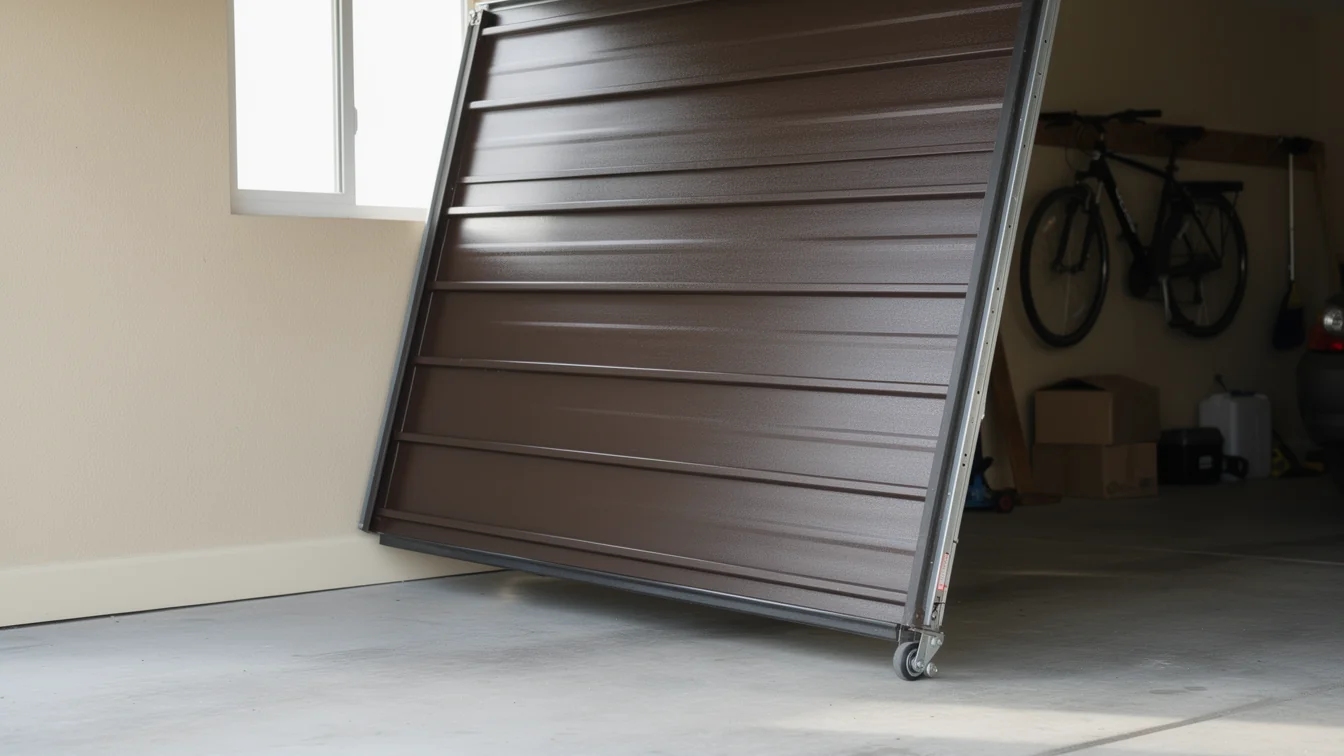
 Why a Garage Door Goes Off Track
Redlands homes built mostly between 1958 and 1999 see tracks warp under severe summer heat.
Why Your Garage Door Leaks Heat in Redlands
Redlands homes built 1958-1999 lose their rubber seals to sun and heat faster than people expect. Here's what that costs you and how to check your own door.
Local detail
The Situation
Most of the housing stock around Redlands went up between 1958 and 1999, with the median build year landing around 1981. Across the 24 named areas that make up this service territory, that 1980s-90s construction wave is the norm, not the exception. Doors and seals installed in that era, or replaced once already since, are now old enough that the bottom astragal and the side weather seals have usually gone brittle. You don't notice it happening. You notice the dust line under the door, or the strip of daylight at the corner, or the fact that the garage runs ten degrees hotter than it used to.
This matters more here than in a mild climate because the band this area sits in is rated HEAT severe. A seal that's merely cracked in a cooler town is a seal that's cooked through here - UV and radiant heat off a asphalt driveway break down PVC and rubber faster than cold does. If your house falls in that 1958-1999 build range, the odds are good the seal under your door predates your current thermostat habits, not your current roof.
The area
What Local Conditions Do
Severe heat does two things to a garage door seal that cold climates don't. First, UV exposure dries out the rubber or vinyl bottom seal until it stiffens and cracks along the bottom edge - the part that touches the slab every time the door closes. Second, the aluminum or steel track and the door skin itself expand in the heat of the day and contract at night, which works the side seals loose from their retainer over repeated cycles. In a house built in the 1980s or 90s, that retainer track is usually the original piece, and after enough seasons it holds the seal less tightly than it did new.
The draught you feel isn't really wind getting in - it's hot garage air finding the path of least resistance into the house, or conditioned air finding its way out. In a severe-heat climate band, that exchange runs both directions depending on the time of day, which is why the same leaky seal can make a garage feel like an oven in the afternoon and let cold slab air in overnight.
What we find
Checking It Yourself
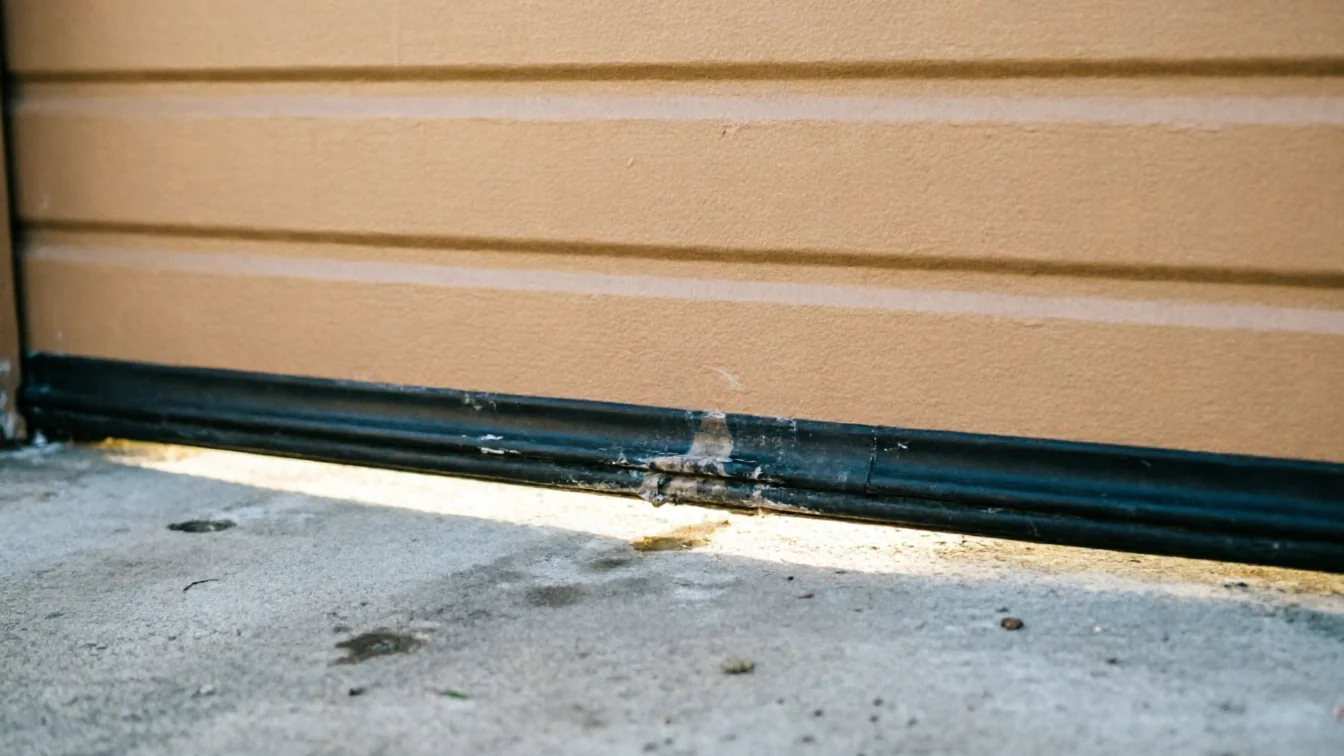
Close the door fully during daylight and look along the bottom edge from inside the garage. If you see light coming through in spots rather than as a continuous thin line, the bottom seal has gapped or cracked - common once a vinyl seal passes the fifteen-year mark, which a lot of 1980s-built homes here have long since cleared. Run your hand along the side seals where the door meets the jamb; if the rubber feels hard and doesn't spring back when you press it, that's UV damage, not just dirt.
Another check: put a hand near the top seal at the header on a hot afternoon. If you feel attic-hot air pushing through rather than sealed air, the top seal has likely shrunk away from the panel - a known failure point on the painted steel doors common in this era's tract construction. None of this takes tools. It takes ten minutes and the willingness to get down on the slab and actually look.
How we work
Where People Go Wrong
The common mistake is treating a cracked bottom seal as a caulk-and-forget job. Caulk doesn't flex with a door that opens and closes daily, and it fails faster on a slab that's already hot from a severe-heat climate band - usually within a season. The seal needs to be replaced as a strip, not patched.
The other mistake is assuming a new seal fixes a door that's actually racked or out of square from decades of thermal cycling. On houses from the 1958-1999 range, especially ones that never had the track re-shimmed, the frame itself has moved slightly over the years. A seal pressed against a door that's not hanging square will gap again within months no matter how new it is. We'll tell you honestly when that's the case - sometimes the fix is adjusting the track, not buying another seal kit. We don't carry every seal profile for every door brand on the truck, so on older or less common doors there can be a short wait on the exact part.
Questions
Common questions
How often should I replace garage door weather seals in Redlands?
There's no fixed interval in the data we have, but given the severe-heat band this area sits in, vinyl bottom seals on homes built in the 1958-1999 range are often brittle well before you'd expect in a milder climate. Check them yearly by hand - if the rubber is stiff and doesn't spring back, it's time.
Why is my garage so much hotter than the rest of my house?
A degraded seal lets radiant heat from the garage door's exterior skin and the slab transfer into the garage air, and a gapped top or side seal lets that hot air migrate toward the house. It's more noticeable in a severe-heat climate band, where surface temperatures run high most of the year.
Can I just caulk a cracked bottom seal instead of replacing it?
Caulk doesn't flex with daily door cycling and tends to fail within a season on hot slabs, so it's a short-term patch at best. A proper replacement strip seal handles the flex and the heat exposure the way the original was designed to.
Recommendation
You Might Also Like
More garage door guides for Redlands homeowners.
Why a Garage Door Goes Off Track
Redlands homes built mostly between 1958 and 1999 see tracks warp under severe summer heat.
 What That Garage Door Noise Is Actually Telling You
Redlands homes built 1958-1999 run original hardware into extreme summer heat.
 When the Power Drops, Your Garage Door Opener Shows Its Age
Redlands homes built 1958-1999 often run openers with no battery backup.
Ready when you are
Need a garage door sorted in Redlands?
Redlands Garage Door Pros repairs and installs garage doors, springs and openers in Redlands, CA and the surrounding area.